A Guide to Brisbane City Council Shed Building Requirements
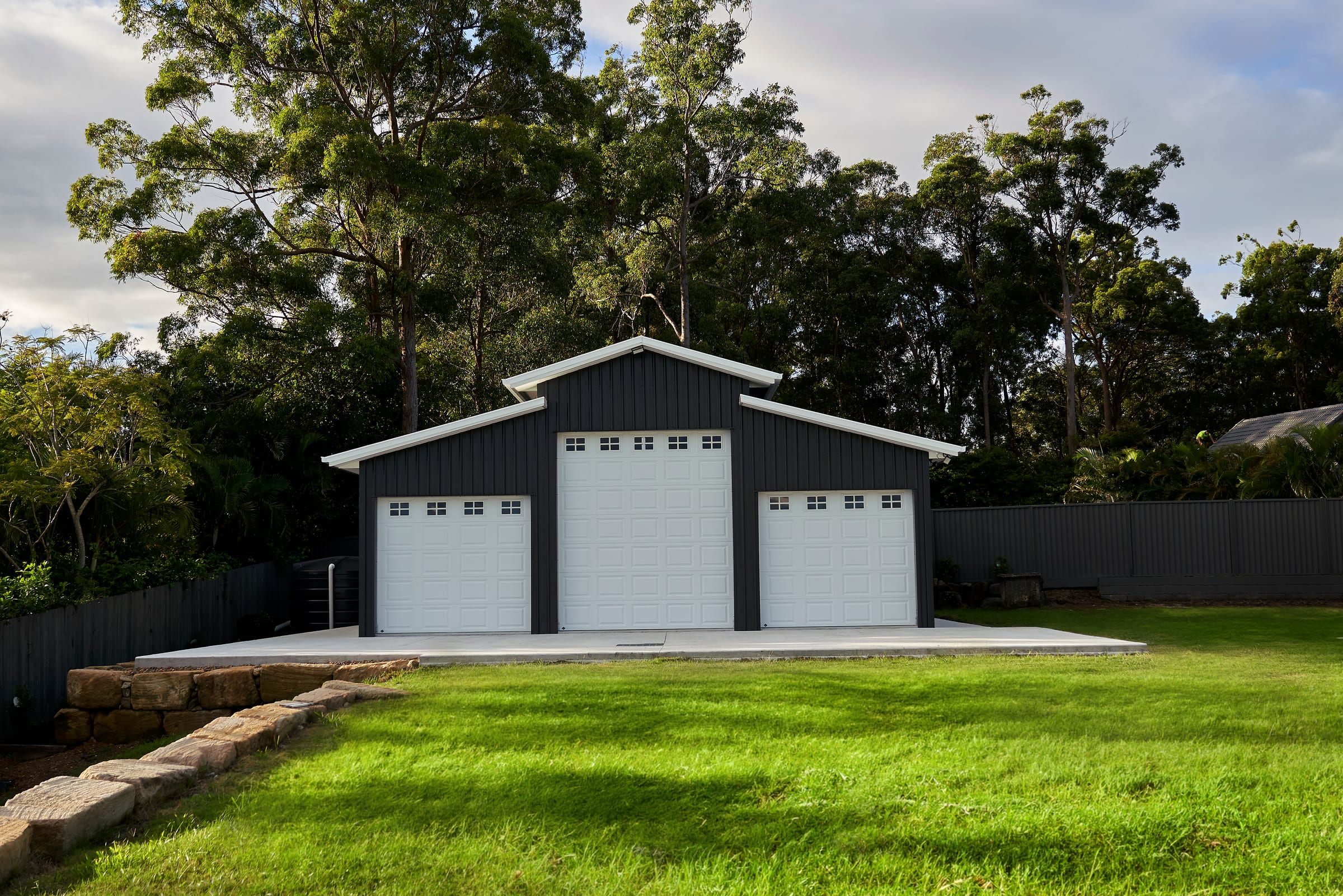
You’ve decided to build a shed on your property in Brisbane. Well done — it’s a fantastic way to add value and upgrade your lifestyle to one of more space and convenience. The catch is Brisbane City Council has a specific set of rules for class 10a structures: when you need approval, where the shed can sit on the lot, and which overlays might apply. We’ve put together this guide to help you make sense of all of it before you commit.
Brisbane City Council covers a huge swath of suburbs — Indooroopilly, Toowong, Chermside, Carindale, Mt Gravatt, Sunnybank, Stafford, Wynnum, Mansfield, The Gap and many more. The rules below apply across the whole council area.
If you build with Stockman, every council application, certifier inspection and overlay assessment is handled by our team — you don’t need to read any of this. We’ve put it together for the times you do want to know what’s going on under the hood. For agricultural shed structures or industrial style sheds, Brisbane City Council can provide direct guidance.
What is a Class 10a structure?
A shed in Queensland is a Class 10a structure — non-habitable buildings including detached garages, carports, and storage sheds. Class 10a buildings are governed separately from your dwelling (Class 1) under the Building Code of Australia, which is why councils set out specific shed rules independent of your house build. Every rule on this page applies to Class 10a buildings on residential lots in the Brisbane City Council area.
The standard rules below apply to lots 450m² and over. If your lot is smaller, additional considerations apply — confirm directly with the council or your building certifier before committing to a design.
Do you need council approval?
Approval is required for any shed that:
- Has a floor area larger than 10m²
- Is taller than 2.4m (or has a mean height above 2.1m)
- Is longer than 5 metres on any side
- Affects the structural integrity of an existing building, retaining wall, or other structure on your property or an adjoining property
- Affects an existing pool enclosure or pool fence
Most Brisbane shed builds tick at least one of those boxes. Smaller garden sheds are usually exempt. Stockman lodges and manages approval for every shed we build in the Brisbane region.
If your property is in a character or heritage overlay area, additional rules may apply — see the overlay section below or check directly with council.
Building codes and standards
Your custom Brisbane shed needs to comply with the applicable codes and standards. Not only does this ensure legal compliance, but it means a structure built for longevity. The codes that apply:
- The Building Act 1975 (chapters three and four)
- Any local law or planning instrument that applies under the Building Act
- The Queensland Development Code (especially MP1.2)
- The Building Code of Australia
Stockman builds every Brisbane shed to these standards as a baseline.
Boundary rules and setbacks
Brisbane defers to the Queensland Development Code for setbacks. The QDC sets out:
- Road boundary: 6 metres
- Side and rear boundaries: 1.5 metres for shed walls up to 4.5m high; 2 metres for walls 4.5–7.5m; an extra 0.5m for every 3 metres above 7.5m
- Maximum site cover: 50%
- Maximum shed height: 8.5 metres on lots up to 15% slope; 10 metres on lots over 15% slope
Some exemptions apply if your shed is short and small — height ≤ 4.5m with a mean ≤ 3.5m, total length along any boundary ≤ 9m, and ≥ 1.5m from a habitable-room window of the adjoining dwelling. The full Queensland Development Code reference has the detailed formula.
Take note of council infrastructure too — sewer, stormwater, and water lines beneath your property determine where the shed can actually sit. Brisbane City Plan and the Queensland Urban Utilities map both show these.
Overlays
Brisbane has six overlays that commonly affect shed builds.
Bushfire
- For dwellings built before 2009, no bushfire protection is required for the shed — but maintain at least 900mm fire separation from the boundary or dwelling.
- For dwellings built after 2009, the shed must sit at least 6 metres from the dwelling, or be built to the same Bushfire Attack Level (BAL) rating as the house.
Flood hazard
A Development Approval for Building Work (DBW) is required for sheds in:
- Brisbane River Flood Planning Area 1, 2a or 2b sub-categories
- Creek / waterway flood planning area 1 or 2 sub-categories
Detached garages and sheds don’t have minimum floor level requirements, but enclosed structures cannot be constructed within an overland flow path.
Traditional Building Character
Sheds, carports and garages at the rear of the building are typically exempt. If your shed is forward of the dwelling, a DBW application is required.
Landslide
Excavation exceeding 50m³ on a landslide-mapped lot typically requires a geotechnical assessment. Stockman handles this for you.
Significant landscape tree
Affects builds on or near significant trees. Stockman checks this as part of every Brisbane quote.
Waterway corridors
Affects builds within waterway corridor mapping. Always confirm Fire Separation requirements per the Queensland Fire Separation reference.
Official resources
- Brisbane City Plan property search — zoning, overlays, planning controls per address
- Brisbane City Plan rules viewer — code-by-code rules
- Queensland Urban Utilities services map — water and sewer locations
- Queensland Development Code (MP1.2) — full setback formula
- Queensland Fire Separation reference — BCA 3.7.2.5 detail
Other South East Queensland councils
Brisbane sits alongside several other major SEQ councils. If your build is near the boundary or you’re comparing rules:
- Logan City Council shed planning
- Moreton Bay Regional Council shed planning
- Ipswich City Council shed requirements
- Sunshine Coast Council shed building rules
Or browse all 10 council guides on our shed planning guide hub.
Last reviewed April 2026. Council planning schemes change — always confirm specifics with Brisbane City Council or your building certifier before lodging.