Queensland Fire Separation — BCA 3.7.2.5 for Sheds and Carports
A guide to fire separation for Queensland sheds
Fire separation is the rule set that governs how close a Class 10a shed, garage or carport can sit to a property boundary or to a Class 1 dwelling without needing fire-rated wall construction. It’s defined by clause 3.7.2.5 of the National Construction Code (NCC) Volume Two — the same code referenced as Building Code of Australia (BCA) 3.7.2.5 in older council documentation.
Most South East Queensland council shed guides reference back to this page. The fire separation rule is consistent state-wide; the council layers (boundary setback distances, BAL ratings, bushfire overlay) sit on top.
What does “fire separation” mean?
Fire separation is the protection between a Class 10a building (your shed) and:
- Any other building on the same property — most relevantly, the Class 1 dwelling.
- A property boundary — to protect against fire spreading to or from the neighbour.
Either the building must be located far enough away that ordinary cladding is sufficient, or the wall facing the boundary or other building must be constructed with a Fire Resistance Level (FRL) — a tested, rated wall capable of containing a fire for a defined period.
The four standard protection methods (BCA 3.7.2.4 / 3.7.2.5)
For a Class 10a shed adjacent to a Class 1 dwelling on the same lot, one of the following applies:
| Method | Condition |
|---|---|
| (a) | The shed is located at least 900mm from the boundary. |
| (b) | If less than 900mm from the boundary, the external wall is constructed with the required FRL. |
| (c) | The shed is located at least 900mm from the Class 1 dwelling. |
| (d) | If less than 900mm from the dwelling, the external wall facing the dwelling is constructed with the required FRL. |
In plain English: keep 900mm clearance from the boundary and the dwelling, or build the relevant wall to a tested fire rating. This is the rule that drives the universal “900mm fire separation” line in every council bushfire FAQ on this site.
Open carport exemption
A genuine open carport is exempt from the fire separation rule under BCA 3.7.2.5 if all five of the following are met:
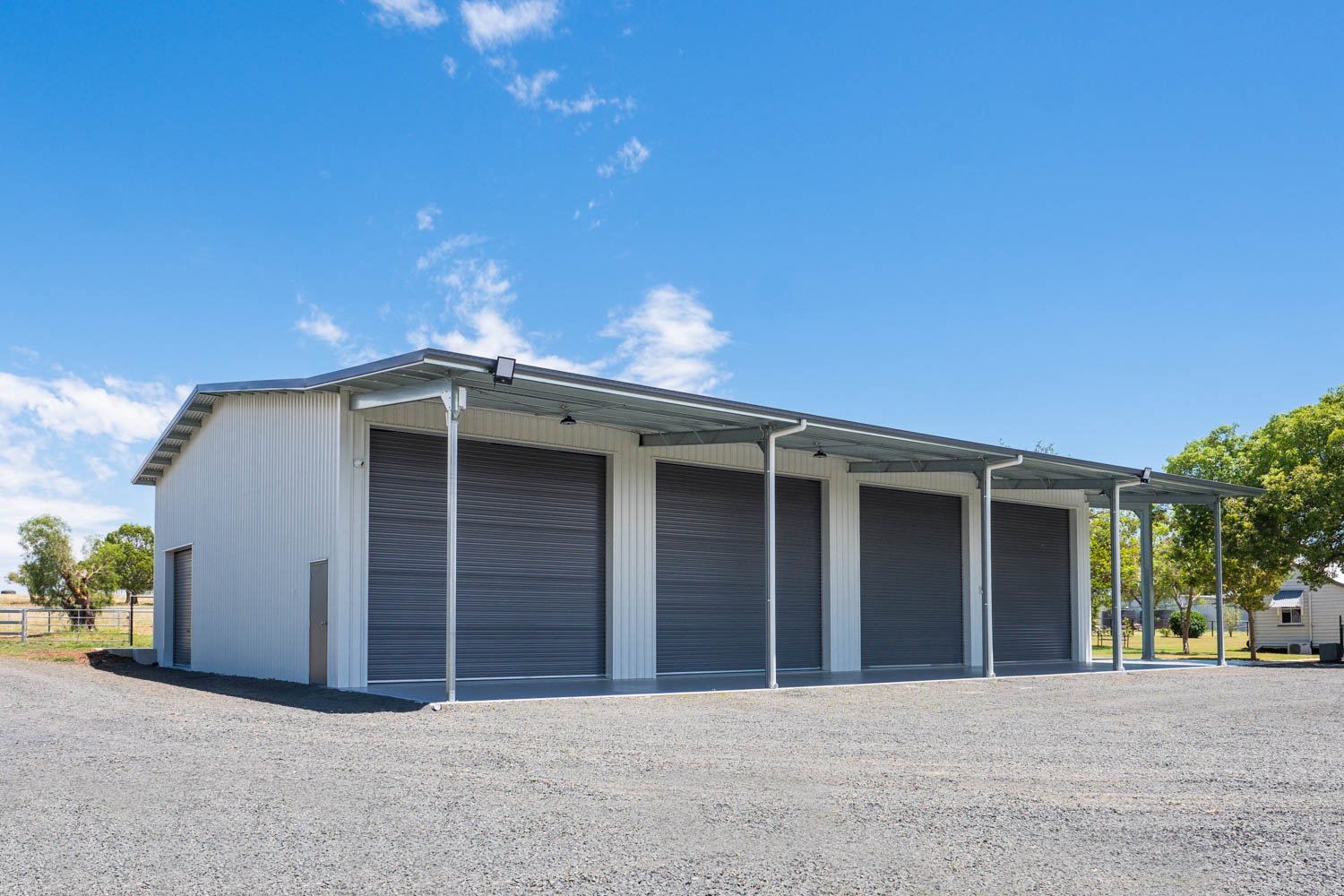
- The carport is open on at least two sides, and not less than one-third of its perimeter is open.
- The roof is constructed of polycarbonate or non-combustible material.
- External walls and any cladding are constructed of non-combustible material.
- No vertical support for the carport roof is provided by the Class 1 dwelling.
- Where the carport shares roof structure with the Class 1 dwelling, the shared roof structure is infill construction (i.e. supported independently and infilled between the dwelling structure).
This is the exemption that allows attached carports to sit close to a side or rear boundary on most residential lots — but it requires the carport to genuinely be open. Roller doors, walls, screens, or solid infill cladding remove the exemption and the standard 900mm rule (or FRL wall) kicks back in.
The NCC Figure 3.7.2.7 illustrates how to identify a compliant open carport — Stockman’s design team confirms exemption eligibility for every carport quote.
Council bushfire overlay rules vs fire separation
Fire separation under BCA 3.7.2.5 is a structural rule — it governs cladding and wall construction. Bushfire overlay rules are a siting and BAL-rating rule — they govern whether the shed needs additional bushfire-attack protection (BAL-12.5, BAL-19, BAL-29 and so on).
Most SEQ councils apply the same bushfire shed rule:
- For dwellings built before 2009, no bushfire BAL rating required for the shed — but standard fire separation still applies (900mm from boundary or dwelling, or FRL wall).
- For dwellings built after 2009, the shed must sit at least 6 metres from the dwelling, or be built to the same BAL rating as the house.
The 6m rule is a council bushfire rule layered on top of BCA 3.7.2.5, not a replacement for it.
How fire separation affects shed design
When we design a shed close to the boundary or close to a house, fire separation is one of the first checks. Three common scenarios:
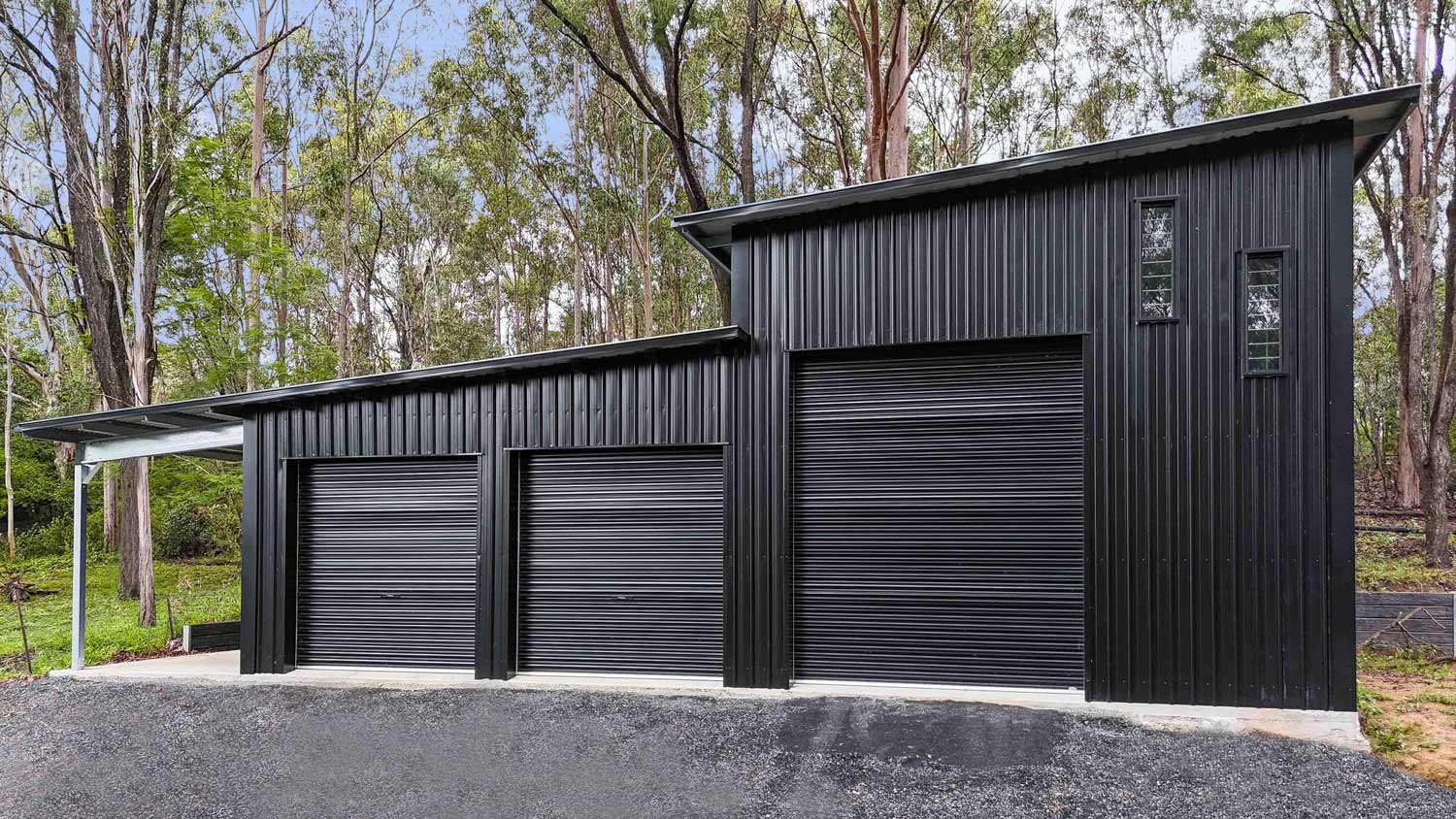
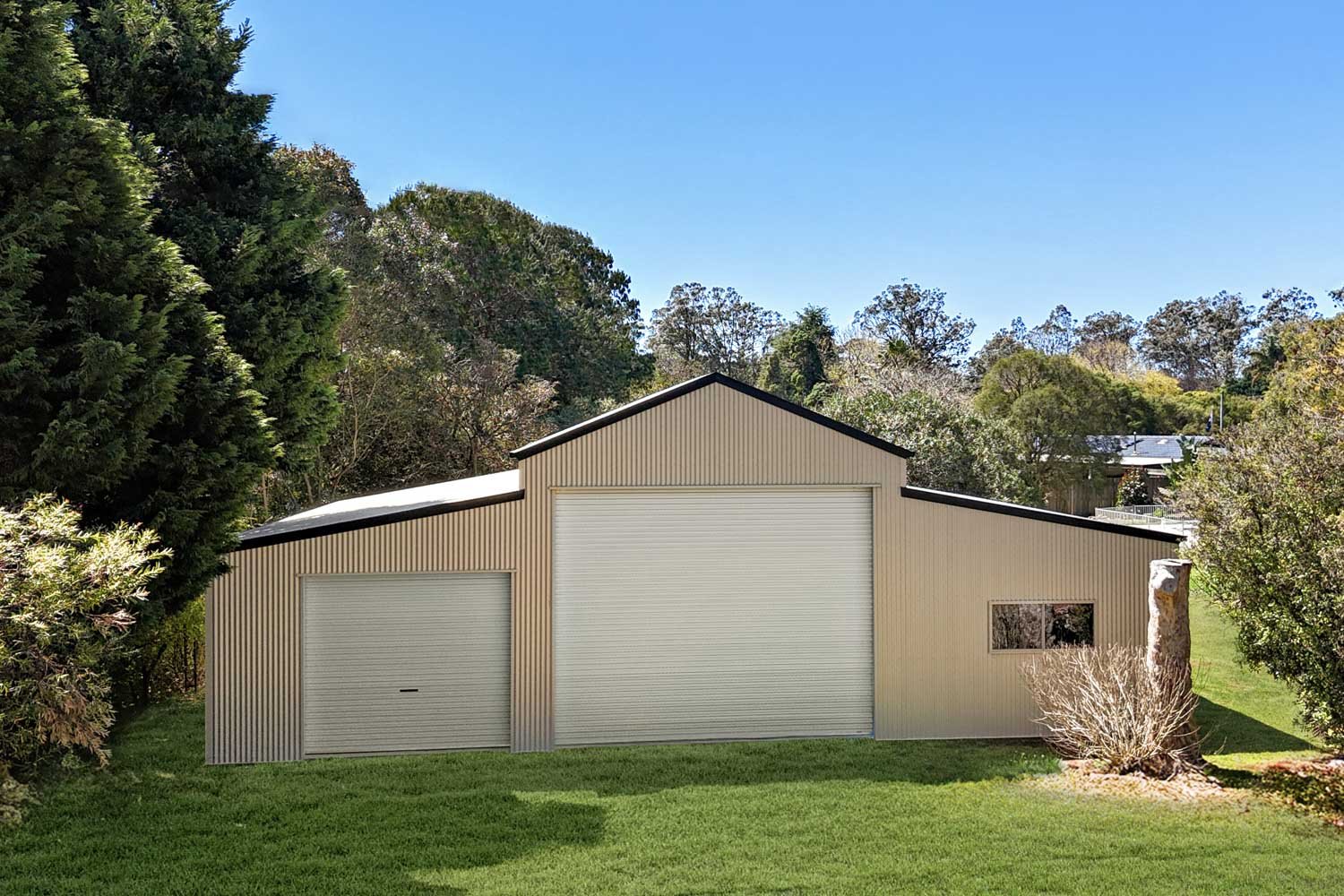
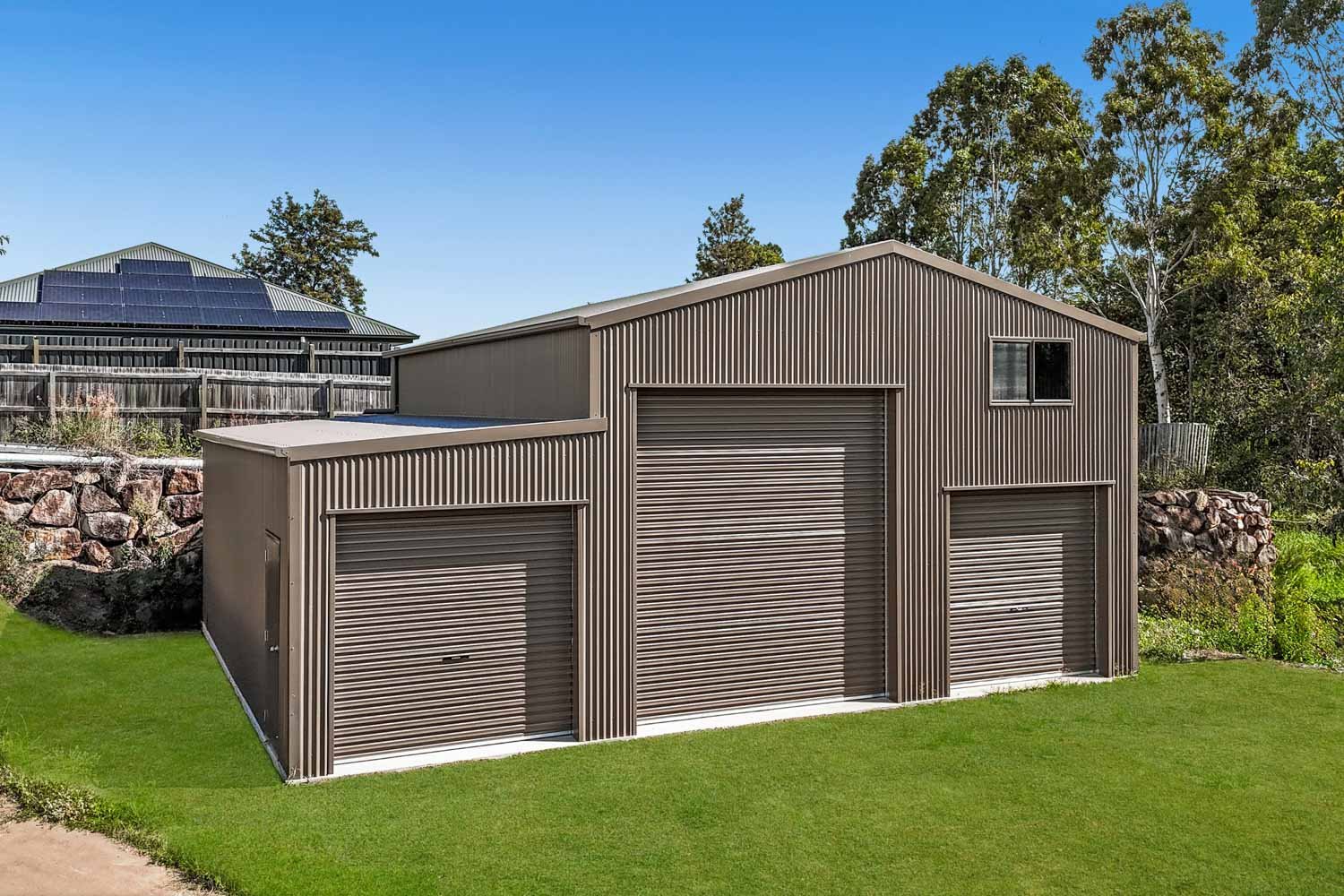
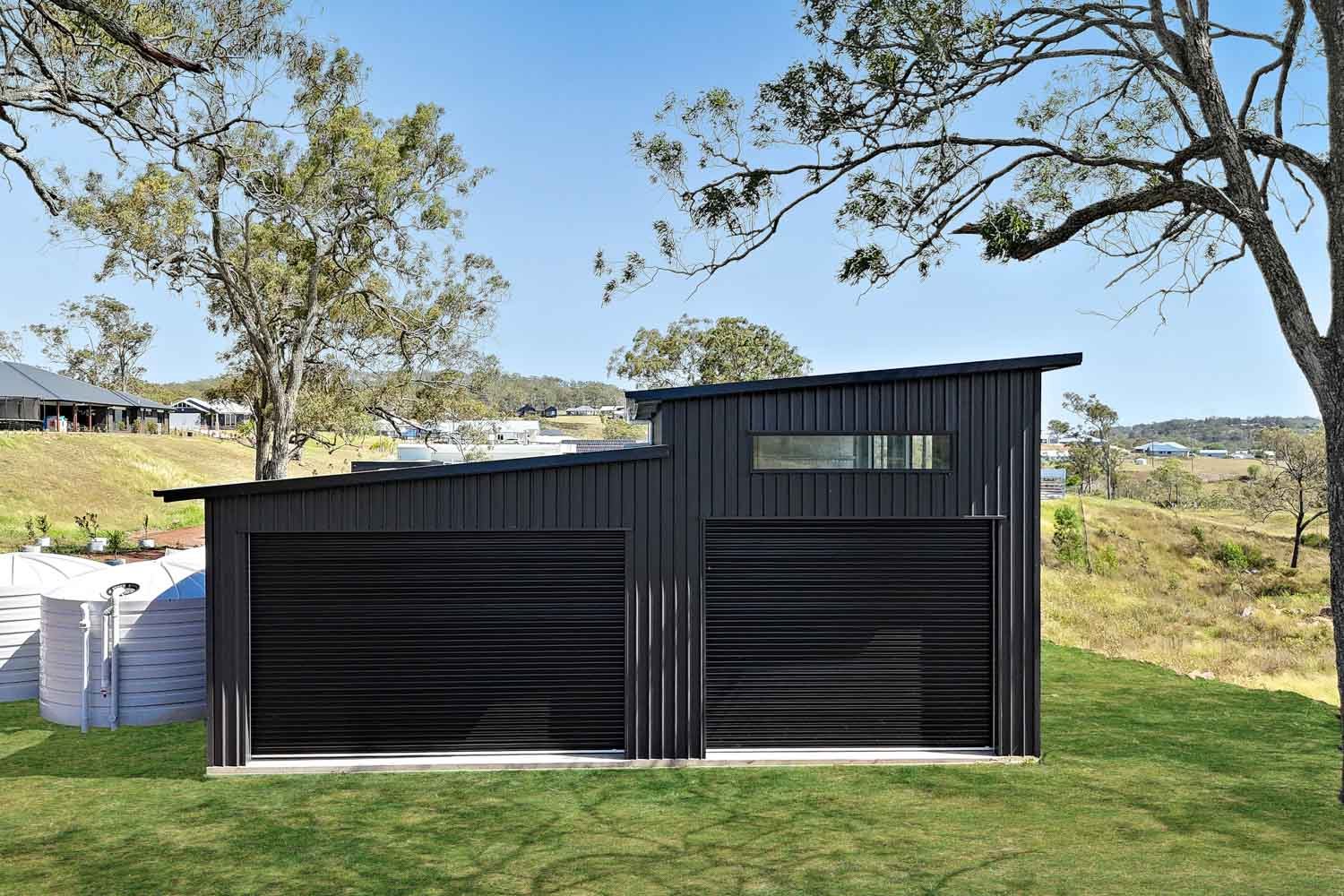
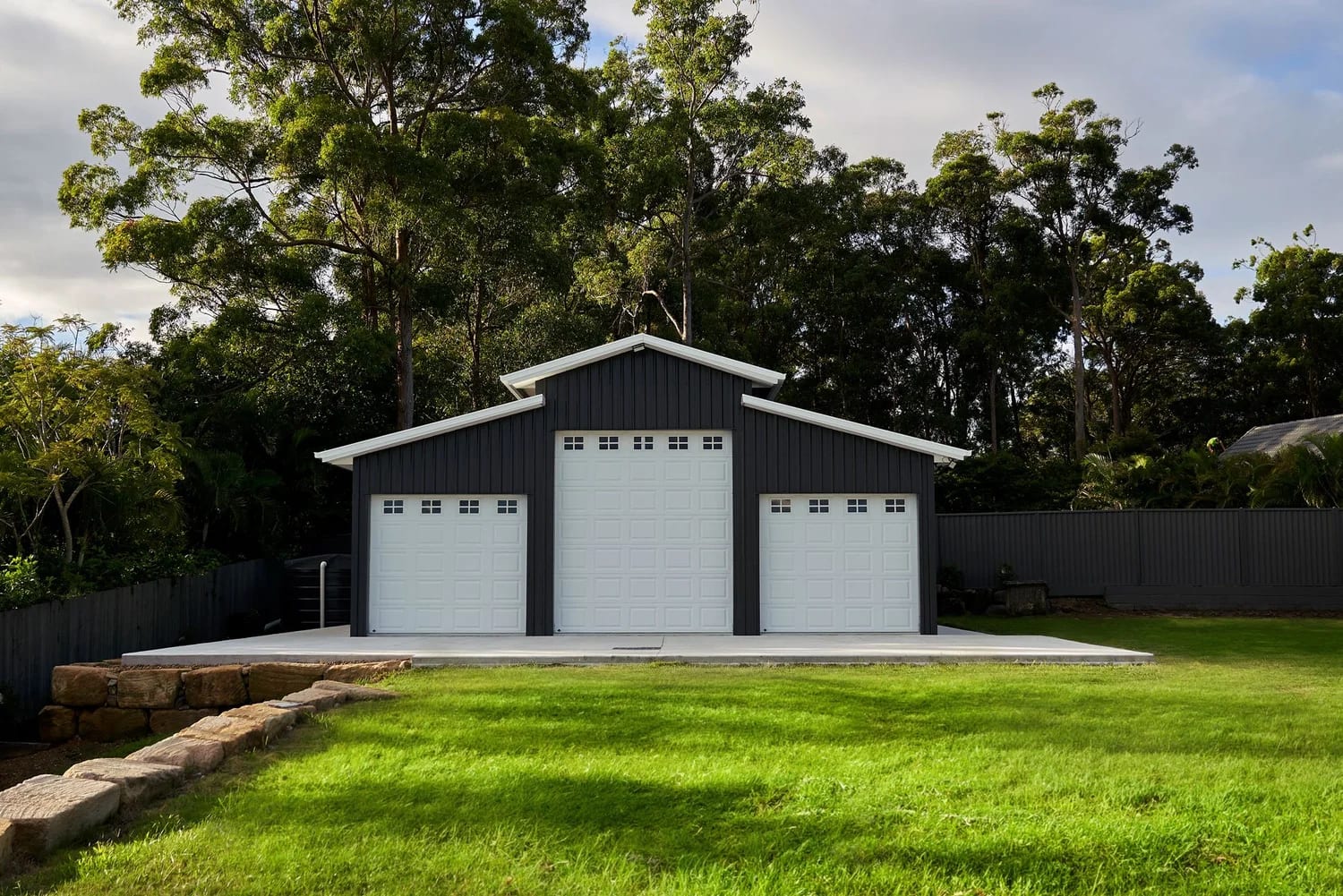
- Free-standing shed at least 900mm from the boundary and the dwelling. Standard COLORBOND® cladding is fine — no FRL wall required.
- Shed at the boundary. The wall facing the boundary needs an FRL, or the shed needs to be re-sited to gain the 900mm clearance.
- Shed within 900mm of the dwelling. The wall facing the dwelling needs an FRL, or the shed needs to be re-sited.
Stockman engineers every shed quote against fire separation requirements before lodging. If your design needs an FRL wall, we build it with rated panels — no surprise costs at the certifier stage.
Stress-free shed building
Stockman Sheds takes care of all council approvals, fire-separation design checks and certifier liaison for you. You relax, we’ll do the heavy lifting. Give us a call on 0493 791 972, or get a quote to start designing your shed.
Official resources
- National Construction Code (NCC) Volume Two — full BCA 3.7.2.5 detail
- Australian Building Codes Board (ABCB) — code structure, amendments and resource library
- Queensland Development Code (MP1.2) — setbacks, site cover and height
- Queensland Fire and Emergency Services bushfire information — bushfire prone area mapping
Council guides that reference fire separation
- Brisbane City Council shed requirements
- Logan City Council shed planning
- Ipswich City Council shed requirements
- Sunshine Coast Council shed building rules
- Moreton Bay Regional Council shed planning
- Noosa Shire Council shed planning
- City of Gold Coast shed building rules
- Gympie Regional Council shed planning
- Toowoomba Regional Council shed requirements
- Scenic Rim Regional Council shed planning
Or browse all guides on the shed planning guide hub.
Last reviewed April 2026. The National Construction Code is updated periodically — always confirm current rules against the official NCC document linked above before lodging.